Get The Yulys App
Start your job search on-the-go and
never miss
a message or job alert.

Get The Yulys App
Start your job search on-the-go and
never miss
a message or job alert.


A commercial driver’s license may qualify someone to operate the same type of truck across the country, but it does not create the same job everywhere. Climate, traffic, freight mix, customer locations, and regional infrastructure can change almost every part of the workday.
The variety covered by truck driving jobs is wider than the title suggests. One driver may spend the day moving trailers between crowded rail terminals, another may cover long regional lanes between distribution centers, and a third may deliver construction materials in extreme heat. The equipment may look similar, but the pace, physical demands, and daily risks can be very different.
Chicago, Dallas, and Phoenix show how strongly location shapes professional driving.
Chicago is a major connection point for highways, rail freight, warehouses, manufacturing, and regional distribution. Drivers working in the wider Chicago IL market may move between city streets, suburban warehouse corridors, industrial areas, rail yards, and routes extending across Illinois and nearby states.
Traffic is one of the most visible challenges. Congested expressways, construction zones, narrow industrial streets, and tight appointment schedules require patience and early planning. A missed exit or incorrect facility entrance can add significant time when turning around a commercial vehicle is difficult.
Weather adds another variable. Drivers may face snow, ice, road salt, heavy rain, strong winds, or sudden temperature changes. Pre-trip inspections therefore carry practical importance: tires, lights, mirrors, wipers, defrosting systems, and brakes can directly affect whether the route remains manageable.
Chicago also supports a wide range of freight. Enclosed trailers serve warehouses and retail distribution, while flatbeds carry steel, machinery, lumber, and construction materials. In this market, flatbed jobs can involve much more than moving an open trailer from one location to another. Drivers may secure loads outdoors in winter weather, navigate industrial customer sites, monitor cargo after rough roads, and coordinate deliveries where unloading equipment and available space are limited.
The Chicago workday rewards drivers who remain calm in congestion, communicate delays early, and prepare for conditions that may change between the first pickup and the final delivery.
Dallas creates a different rhythm. The metropolitan area is spread across a large network of highways, suburbs, warehouses, and distribution centers. A route described as “local” may still cover considerable distance without leaving the broader Dallas–Fort Worth area.
Drivers often spend more time at highway speeds and may move between large logistics facilities located far apart. This makes fuel planning, route timing, and traffic awareness especially important. Congestion can build quickly around major interchanges, while toll roads and parallel highway routes may complicate navigation.
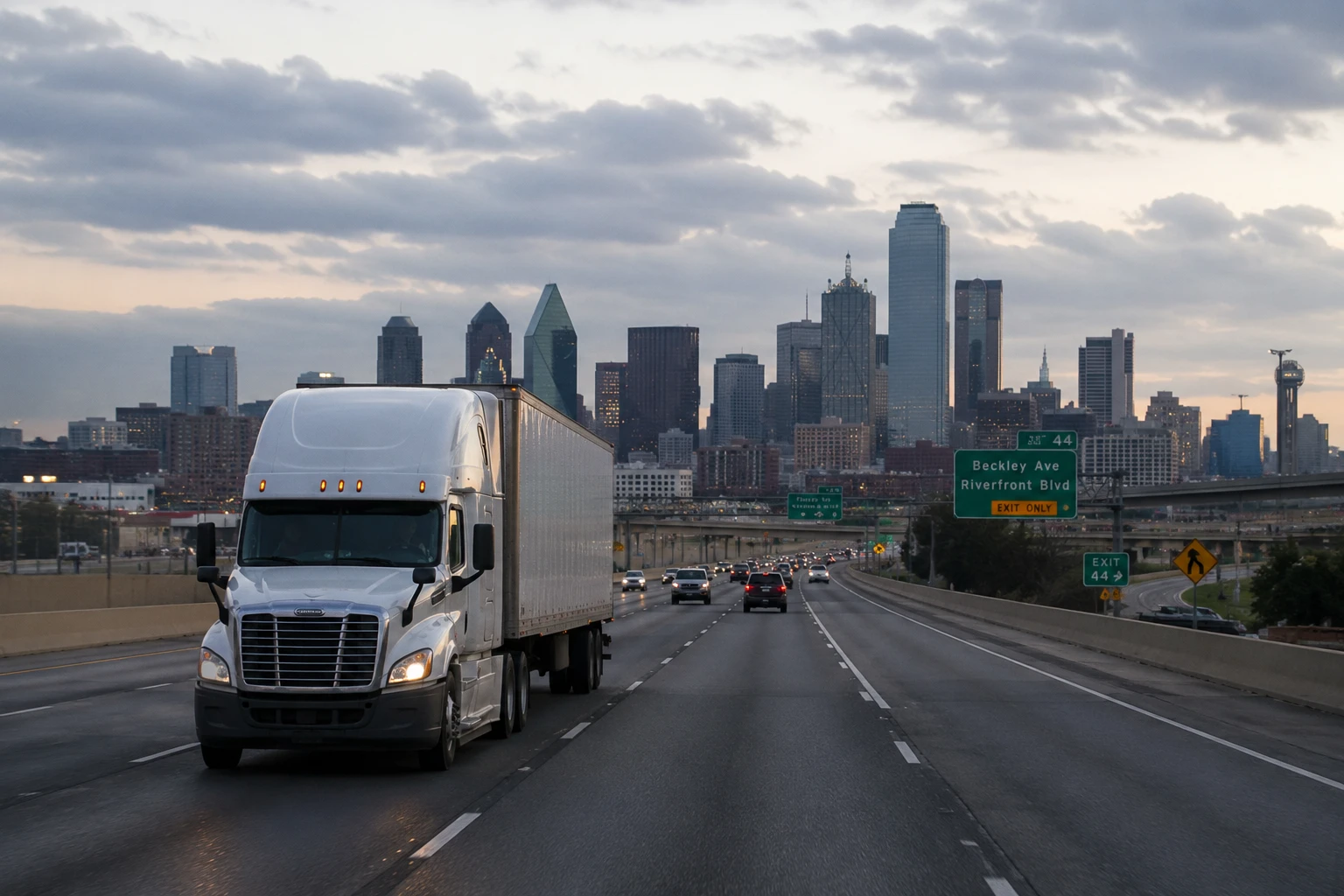
Heat is another part of the job. Reliable air conditioning is essential for driver comfort and alertness, but high temperatures can also affect tires, cooling systems, and the way equipment performs during long periods of operation. Drivers need to pay attention to warning signs rather than treating heat-related issues as minor inconveniences.
The freight mix around Dallas can include retail distribution, food and beverage loads, manufacturing supplies, construction materials, and regional freight moving throughout Texas and neighboring states. Compared with Chicago, winter conditions are usually less central, but long distances and sustained heat can make equipment reliability more important over the course of the day.
Dallas work often suits drivers who are comfortable with broad service areas, extensive highway driving, and routes that appear straightforward but require disciplined time management.
Phoenix presents another set of conditions. The region’s expanding suburbs, construction activity, industrial development, and distribution facilities generate steady commercial traffic, but extreme heat shapes both the vehicle and the driver’s routine.
Cab climate control is a safety issue rather than a luxury. A weak air-conditioning system can increase fatigue and make long periods behind the wheel difficult. Drivers must also watch engine temperature, tire condition, fluid levels, and other equipment concerns that may become more serious in prolonged heat.
Phoenix routes may involve busy urban roads, newer industrial areas, construction sites, and long stretches between customer locations. Bright sunlight and glare can affect visibility, while dust may reduce clarity around yards and unpaved delivery areas.
Construction freight can add physical work. Drivers handling building materials or equipment may spend time outside the cab securing cargo, checking straps, or waiting at sites with limited shade. The workday must therefore be planned around hydration, safe exposure to heat, and realistic expectations about how quickly outdoor tasks can be completed.
Unlike Chicago, Phoenix drivers rarely organize the day around snow and ice. Instead, they manage heat, sun exposure, equipment cooling, and fast-growing road networks where navigation details can change as new facilities and developments appear.
Chicago, Dallas, and Phoenix may all offer commercial driving work, but they create different professional environments. Chicago emphasizes congestion, intermodal activity, winter preparation, and dense industrial routes. Dallas combines large service areas, major highway networks, and sustained regional movement. Phoenix adds extreme heat, construction growth, and greater physical strain during outdoor work.
Freight type still matters, as do pay, schedules, equipment, and carrier standards. But location determines how all of those factors are experienced. The same license can lead to completely different workdays depending on the roads, weather, customers, and cargo surrounding the driver.
©YulysLLC - 2026 All Rights Reserved | Terms of Service | Privacy Policy | Data Deletion | Yulys Ads Program